Anatomy of the Kill
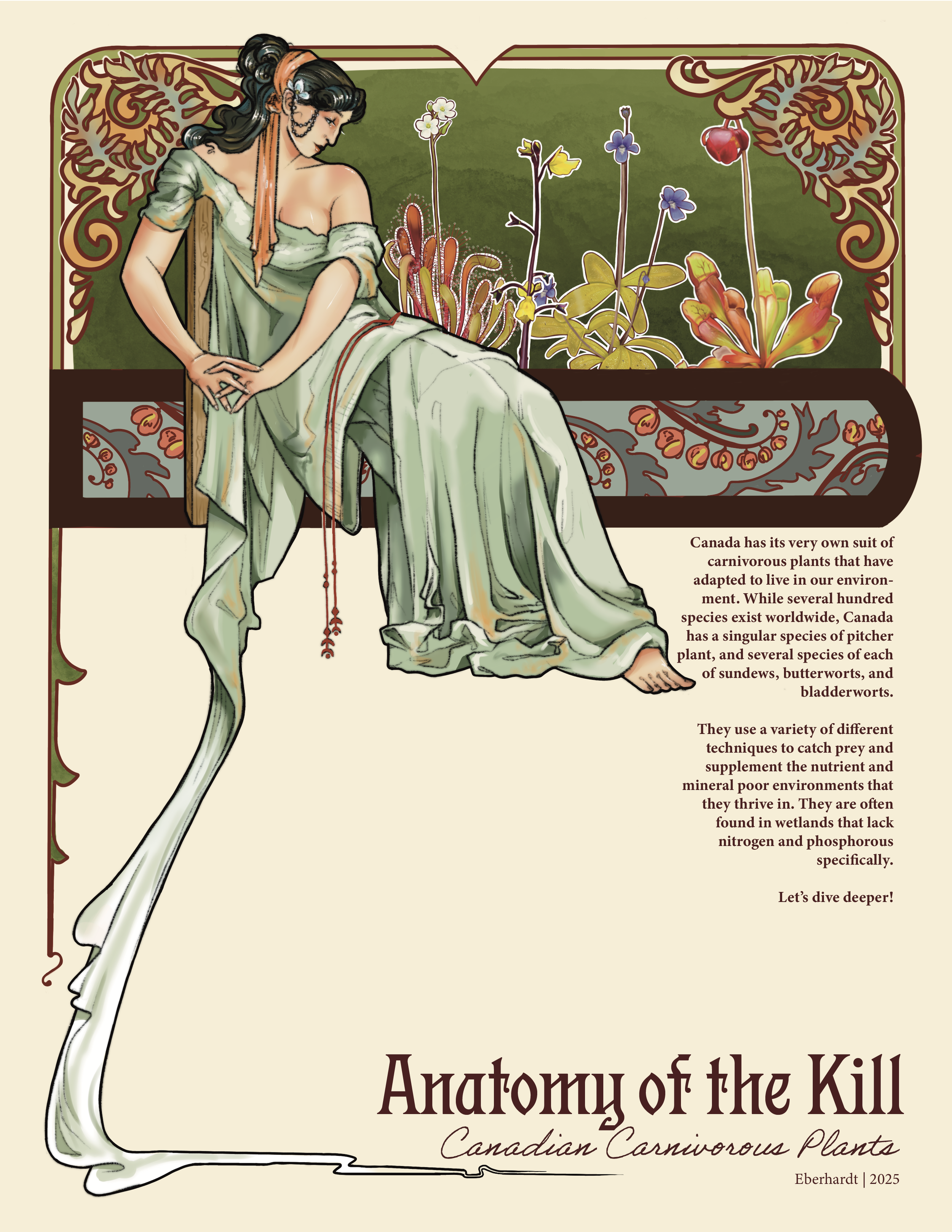
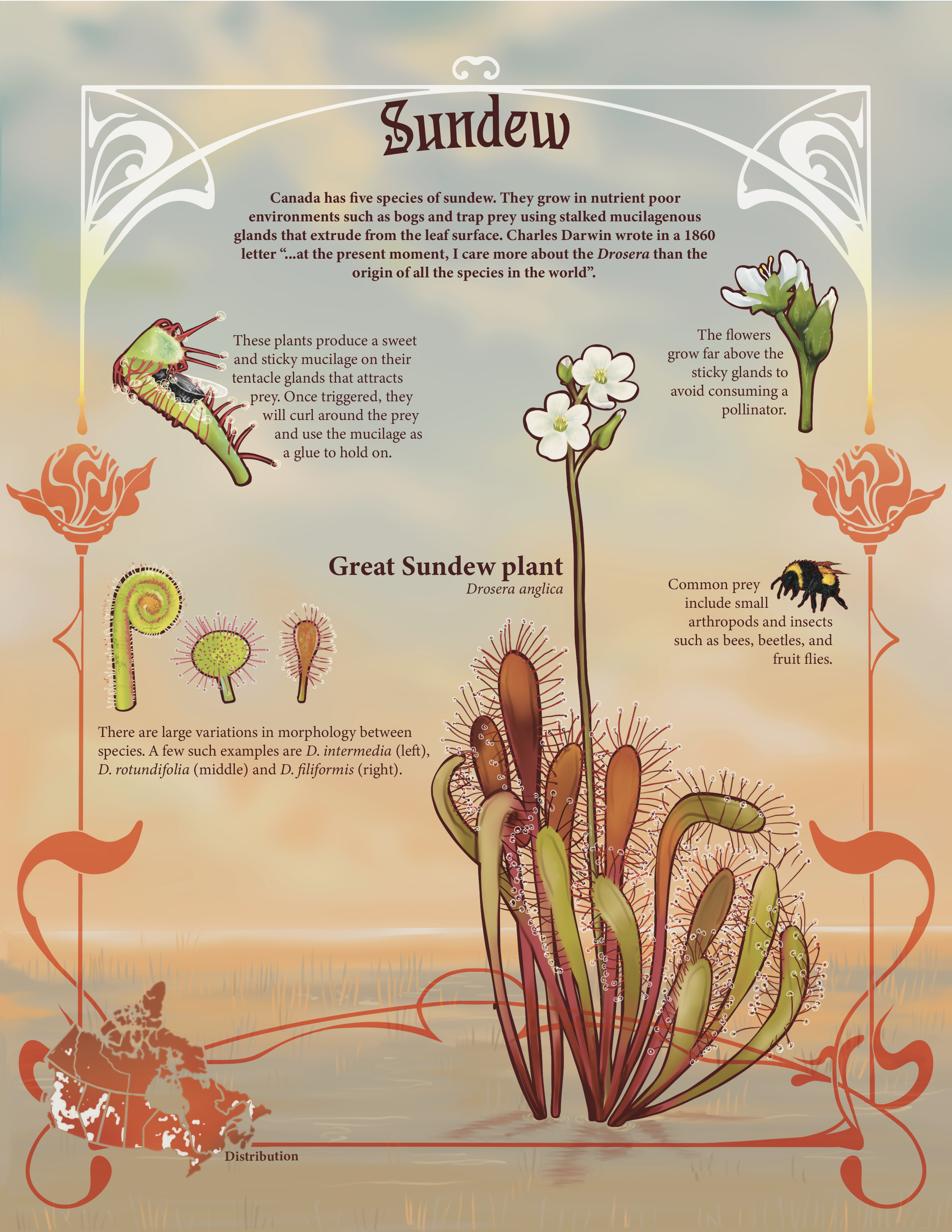
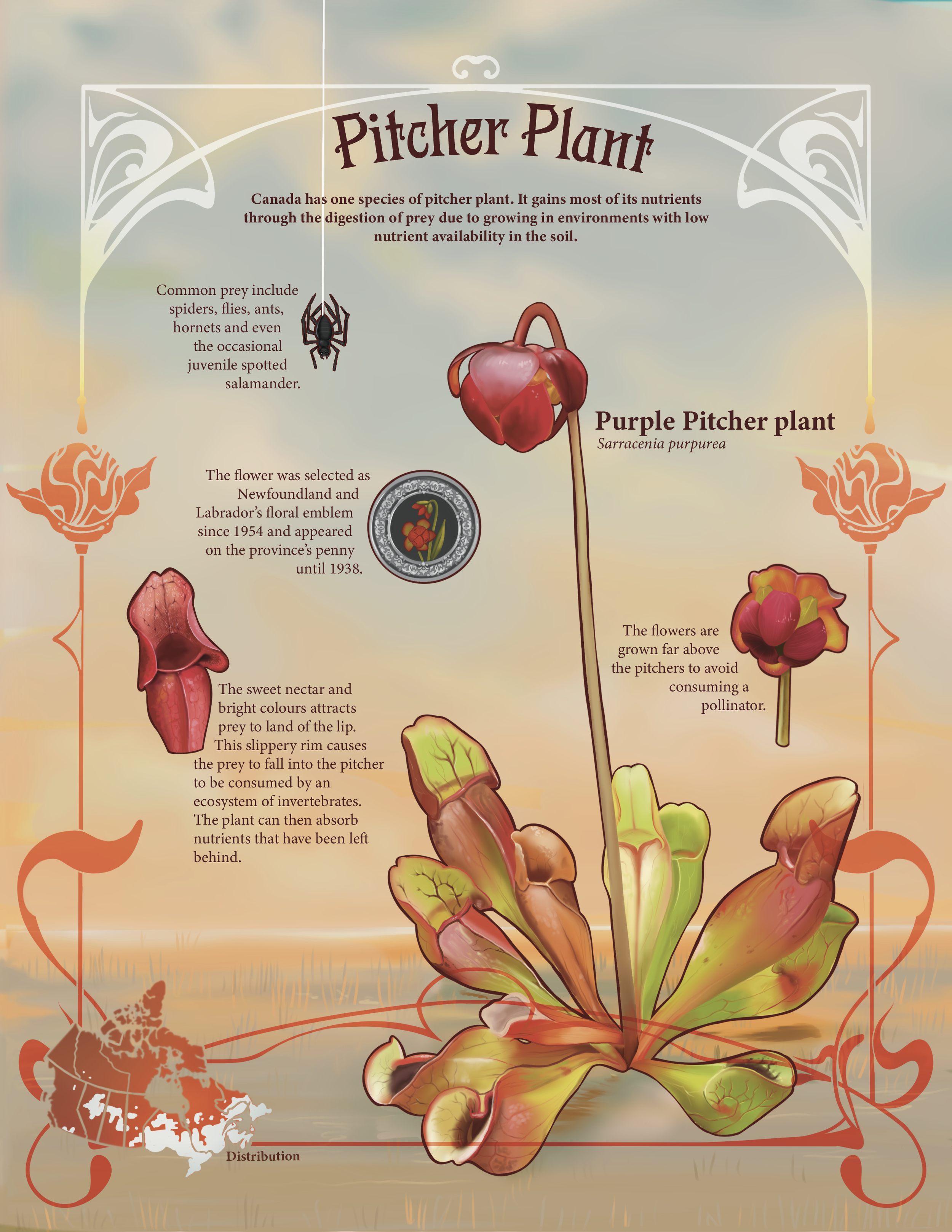
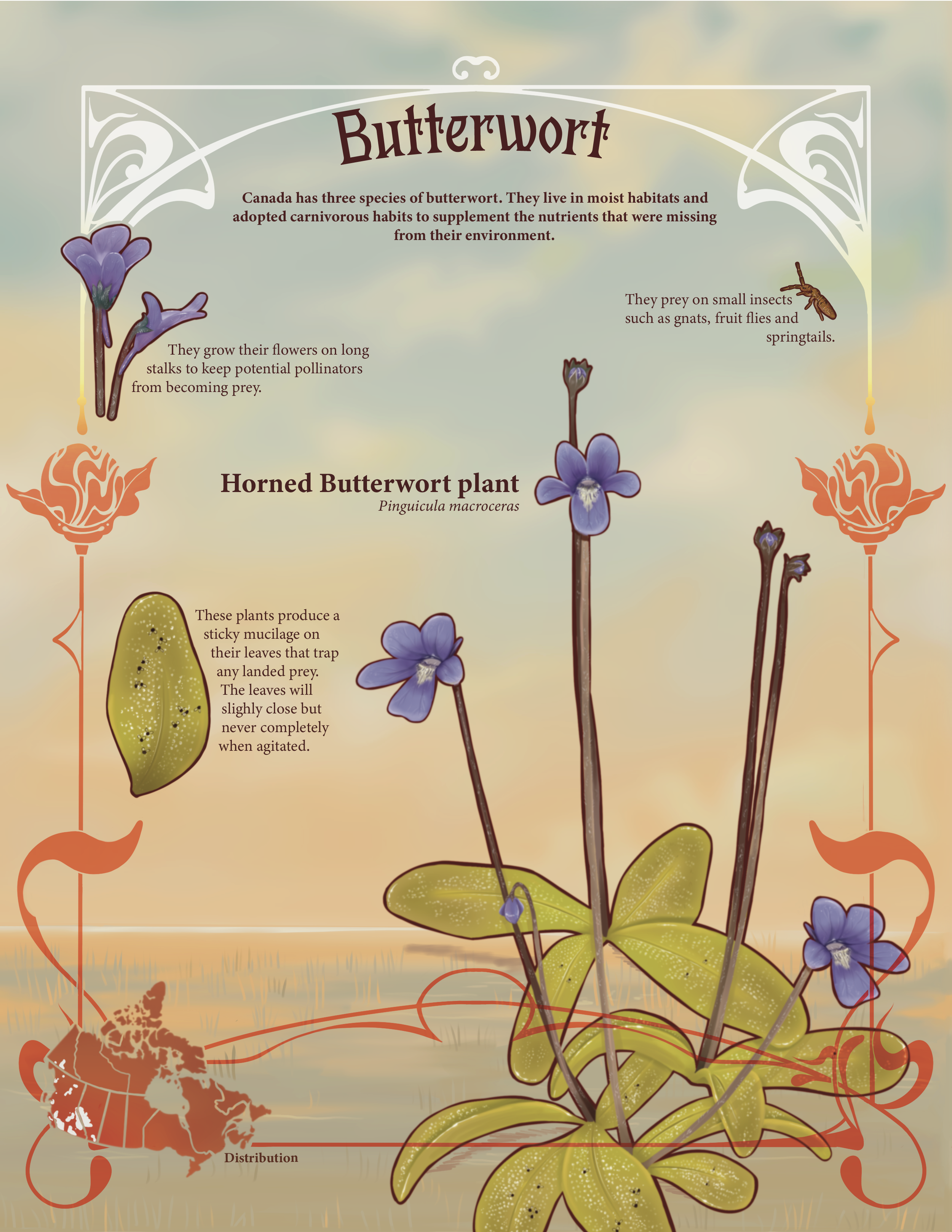
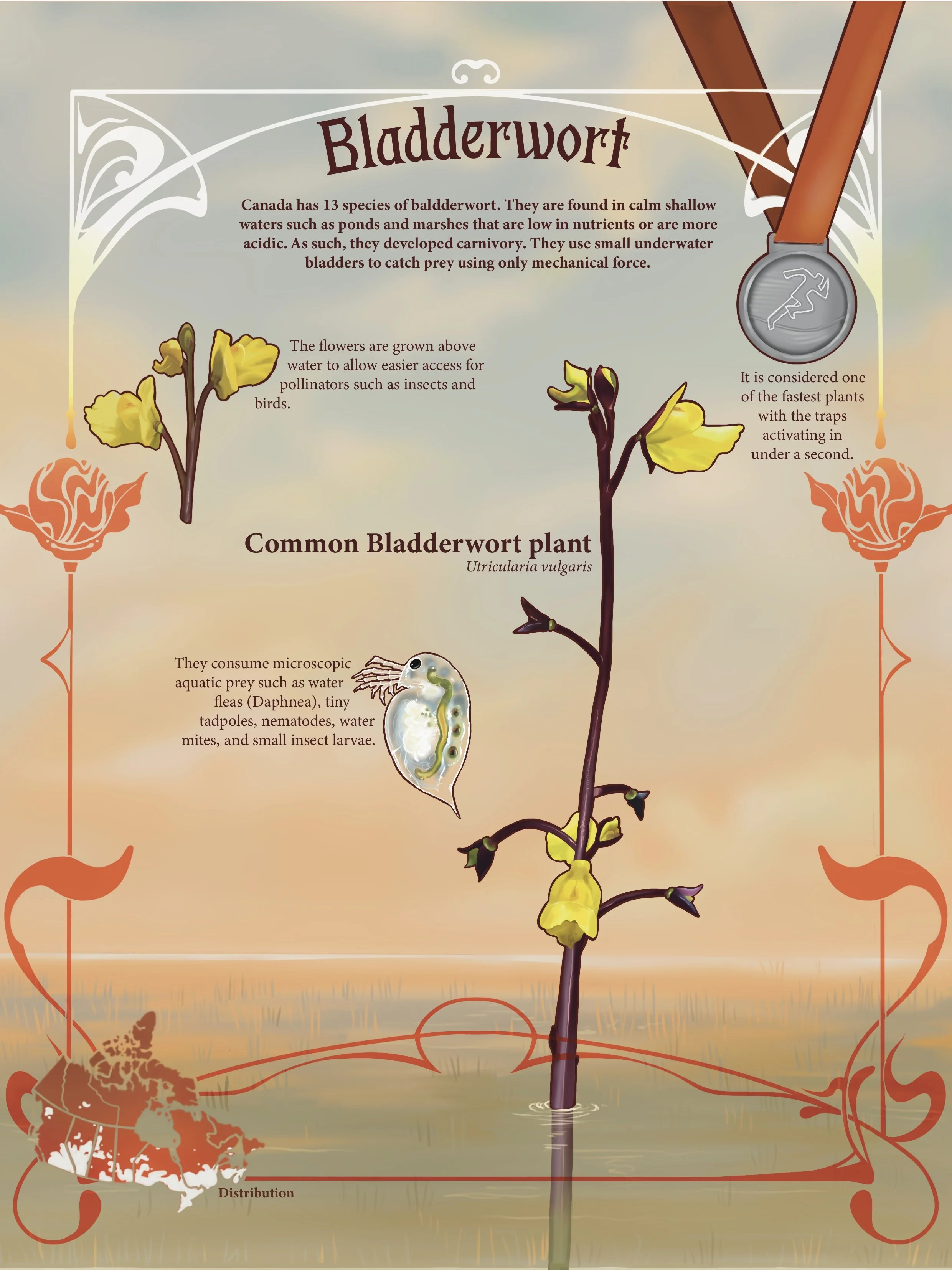
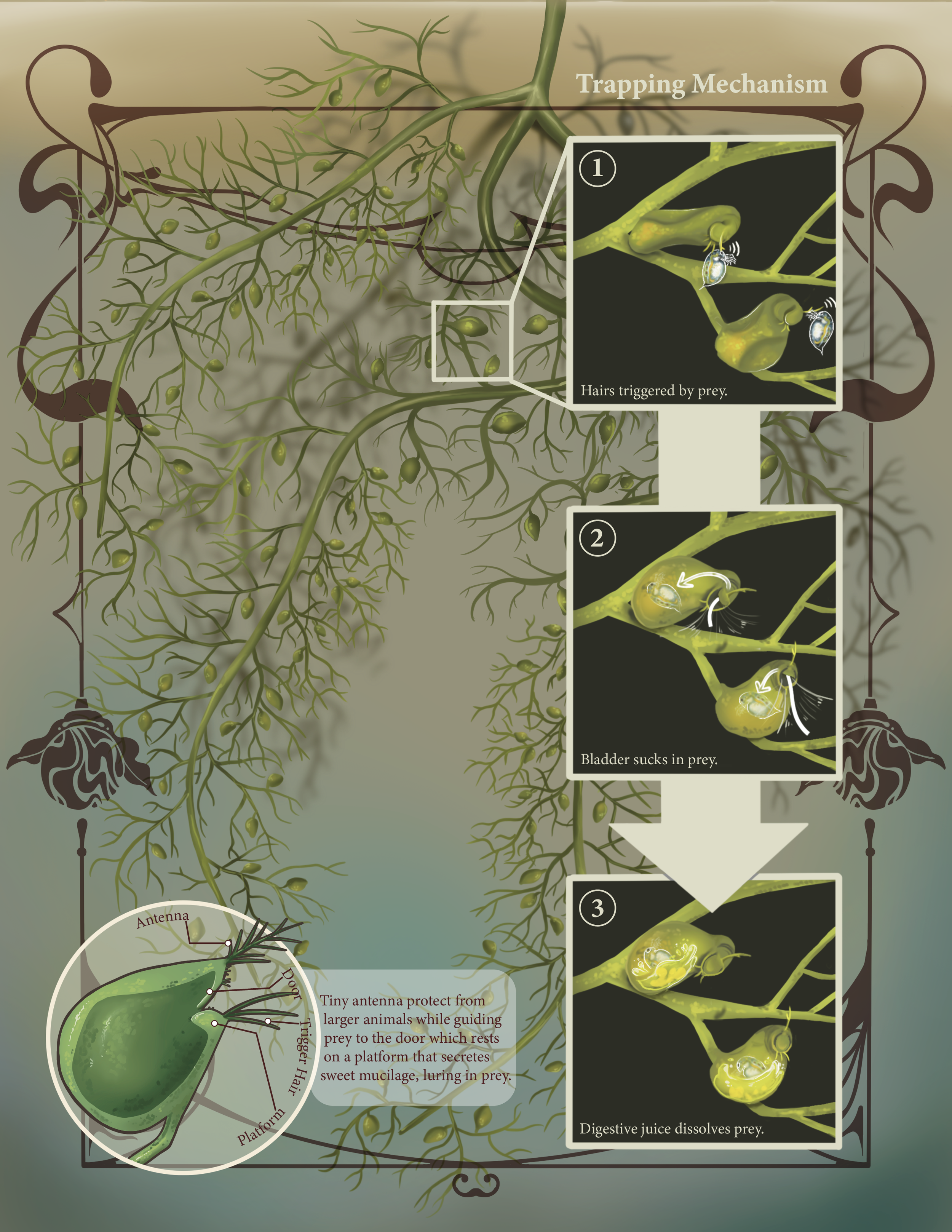
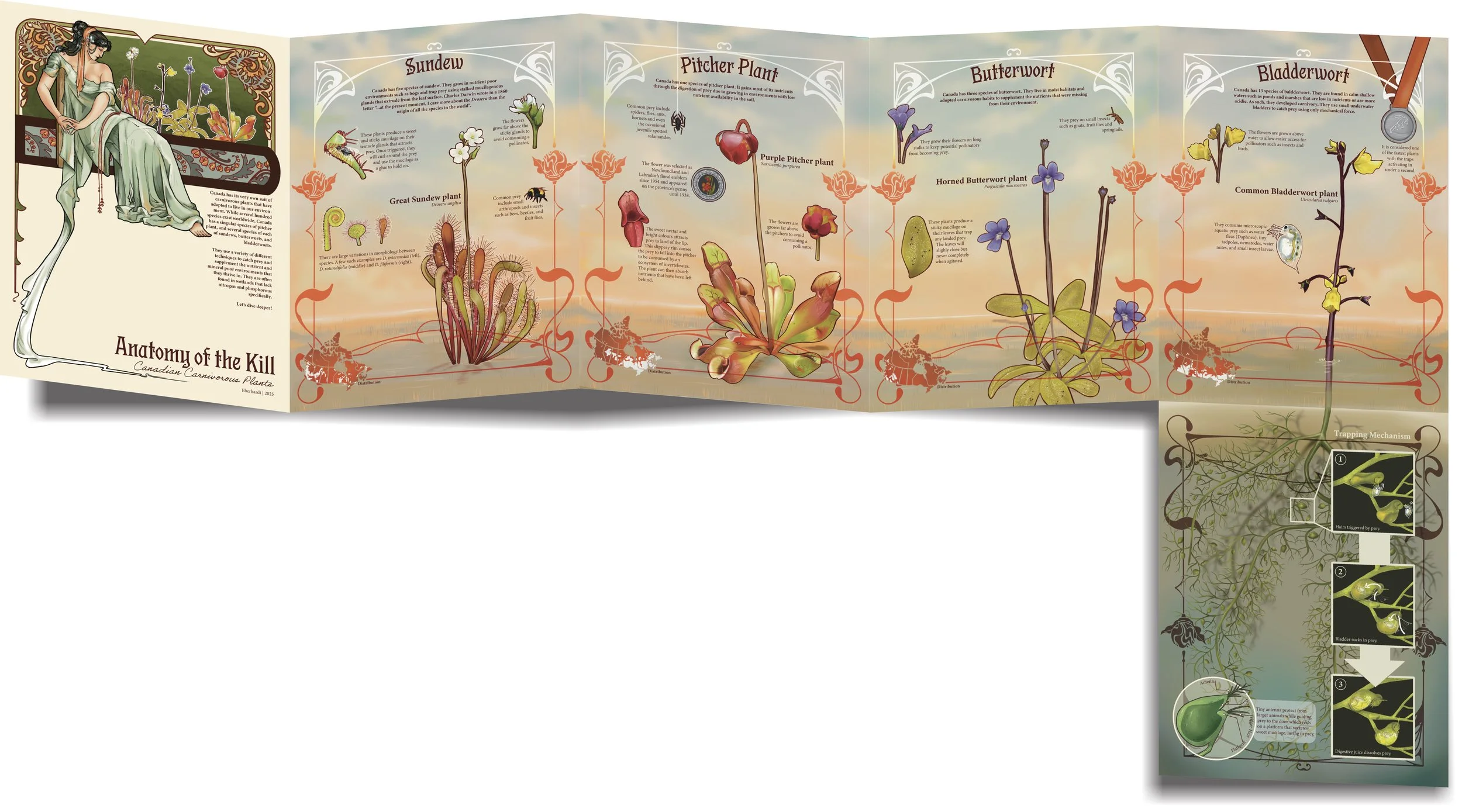
Discover the anatomical adaptations that enable Canadian carnivorous plant genera to capture and kill their prey. This infographic was designed to engage a general audience with the survival strategies of Canada’s four native genera of carnivorous plants. The layout was produced as five tear-away panels that draw viewers in and encourage deeper exploration of the topic. The panels function as a cohesive fold-out display—with a fold-down feature revealing the underwater anatomy of bladderworts—or as standalone educational posters. The old English font, the colour palette, and graphical elements were inspired by Art Nouveau, each plant is illustrated in vivid colors to highlight its anatomical features while subtly hinting its wetland habitat in the background. The design feature choices were made to draw in the general viewer, regardless of initial interest in flora. Canadian carnivorous plants face growing risks of extinction due to their reliance on specialized habitats, which are increasingly threatened by climate change and urban development. Protecting these fragile wetland ecosystems is essential for conserving Canada's unique carnivorous plant diversity. Public awareness, knowledge sharing, and mindful exploration are key to supporting conservation efforts—so tread lightly!
Clients
Shay Saharan (Professor, University of Toronto)
Date
March 2025
Role
Research, Content Development, Visual Development, Layout
Format
5-page printed brochure
Audience
Science interested lay audience
Tools
Adobe Illustrator, Autodesk Maya & Procreate
Research
Research was conducted to understand the science behind how these plants consume pray and tactics they use to attract unsuspecting with a list of references available below.
Preproduction
During this phase, several draft iterations were drawn up to explore the variations ways the infographic could be depicted. The focus was on clarity of the story and overarching main concepts.
Production
The final rendering of each plant, the title page and the background was created in Procreate as individual elements. It was important for me to ensure that the background flowed seamlessly and continuously while remain clear as tearable lines. The layout and text was finalized in Adobe Illustrator allowing for fluidity in editing and moving around elements.
Publication
This piece was chosen as a showcase Biomedical Communication piece in the Spring 2025 edition of the Institute of Medical Science (IMS) Magazine. It was also submitted as a didactic natural sciences pieces to the 2025 Association of Medical Illustrators (AMI) Salon as a student entry.