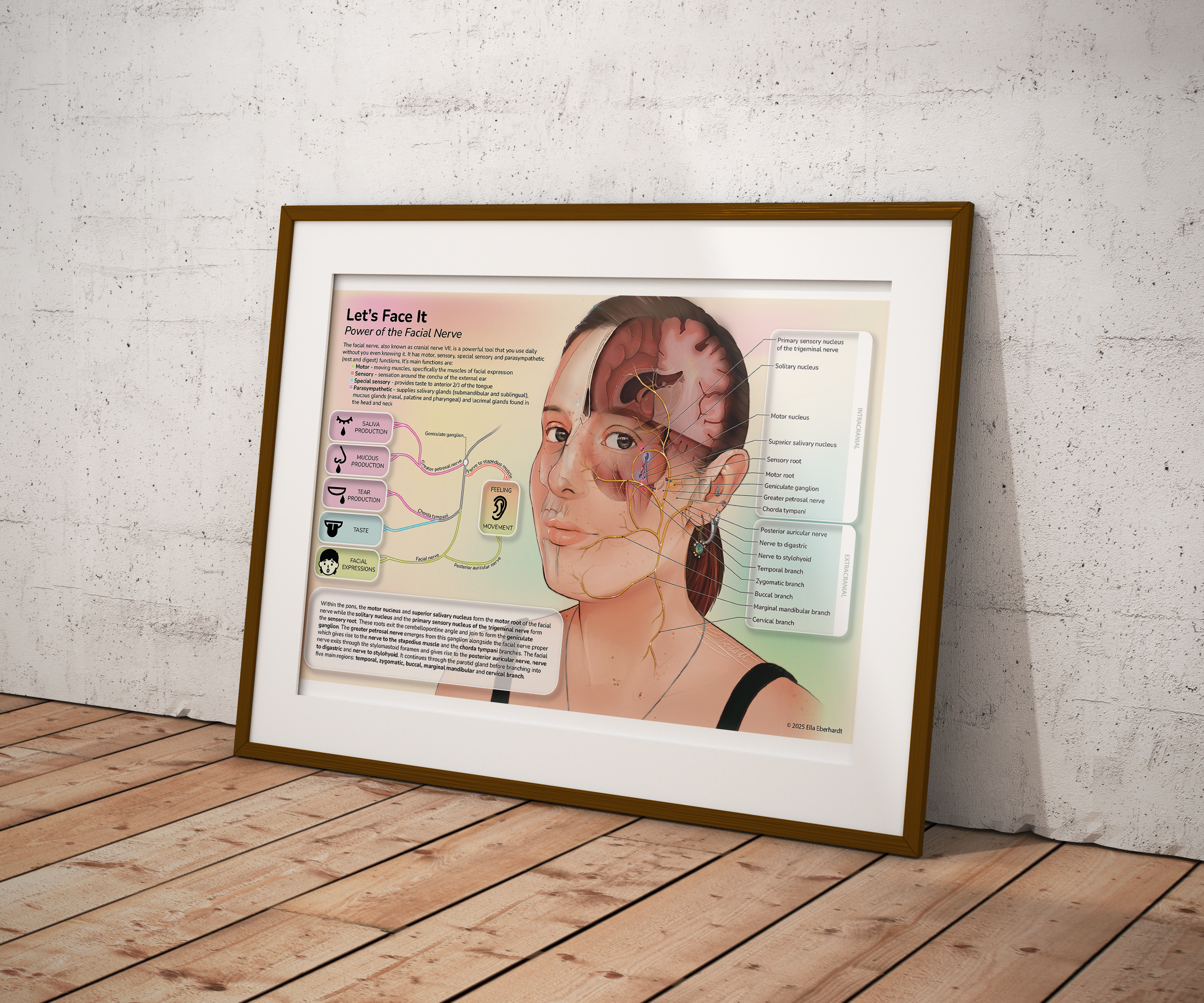
Let’s Face It: Power of the Facial Nerve
Explore the anatomy of the facial nerve and the different ways that the branches work for your motor, sensory, special sensory and parasympathetic systems. This piece aims to help an educated audience explore the intricacies of the facial nerve branches and the pathways that information takes from your pons.
Clients
Shelley Wall (Professor, University of Toronto)
Kristy Cheung (Content expert)
Date
December 2025
Role
Research, Content Development, Visual Development, Layout
Format
2-page spread for print
Audience
Educated lay audience and neuroanatomy students
Tools
Adobe Illustrator, Cinema4D & Procreate
Research
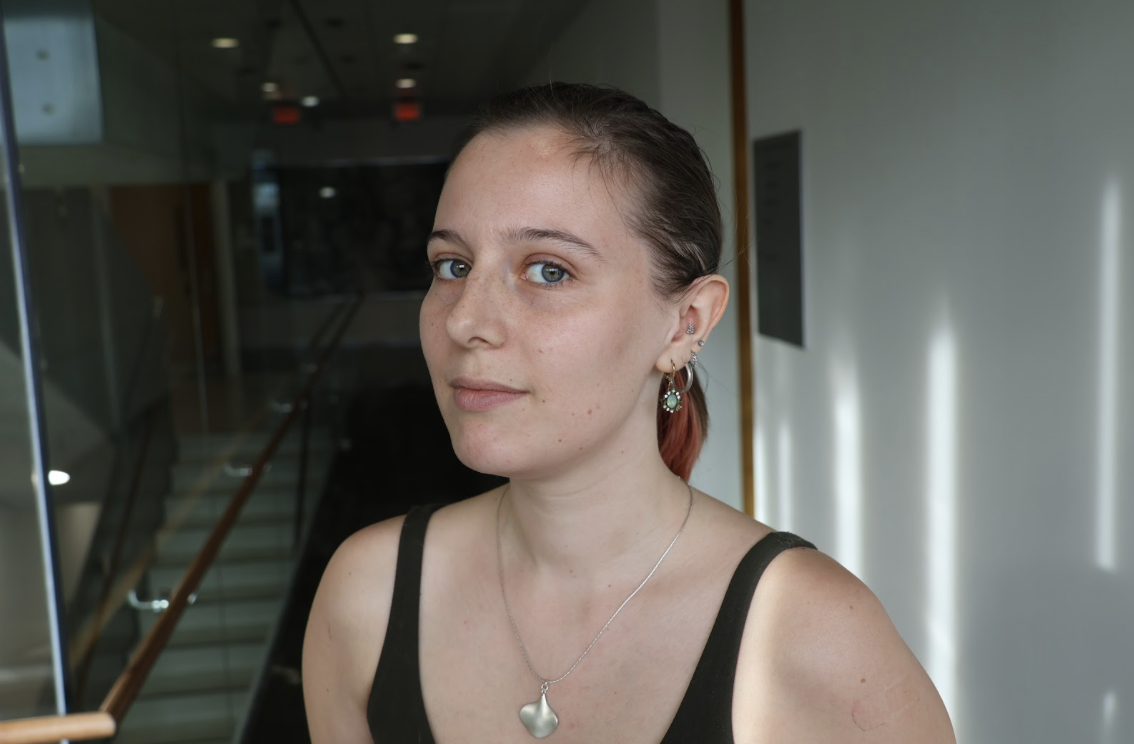
The goal of this piece was to familiarize ourselves with the gross anatomy of the brain in relation to the cranial craving and external features of the head, to explore the relationship between 2D sections and the brains 3D volumes and to create a conceptual, realistic illustration that is distinctly yours (self-portrait). I began collecting information related to the facial nerve, its different functions as well as textural references. We took photos as a class to use as reference for the self-portrait portion as well! It was important that the reference I used gave a clear view of the portion of the brain in-situ that I wanted to highlight.
Sketching
Once I was confident with the view and information being communicated, I moved onto sketching. The main challenge was exploring the way the facial nerve branches across the entire face and depicting it in a manner that was both accurate and did not obscure any important structures.
Rendering
The next step was moving onto rendering and adding colour to the illustration. I wanted to ensure that the facial nerve stood out against the skin and that depth was clearly communicated.
Layout
I laid the final piece out as a 2-page spread that would exist in a magazine or publication and act as a way for an educated audience to explore the form and function of the facial nerve.
Publication
This piece was chosen as a showcase Biomedical Communication piece in the Winter 2026 edition of the Institute of Medical Science (IMS) Magazine.